Cornhole board dimensions
A regulation cornhole board is 48 inches long and 24 inches wide, with a 6-inch hole centred 9 inches from the back edge. The back edge stands 12 inches off the ground and the front edge sits low, between 2.5 and 4 inches depending on which rule book you follow. Bag specifications live on their own page.
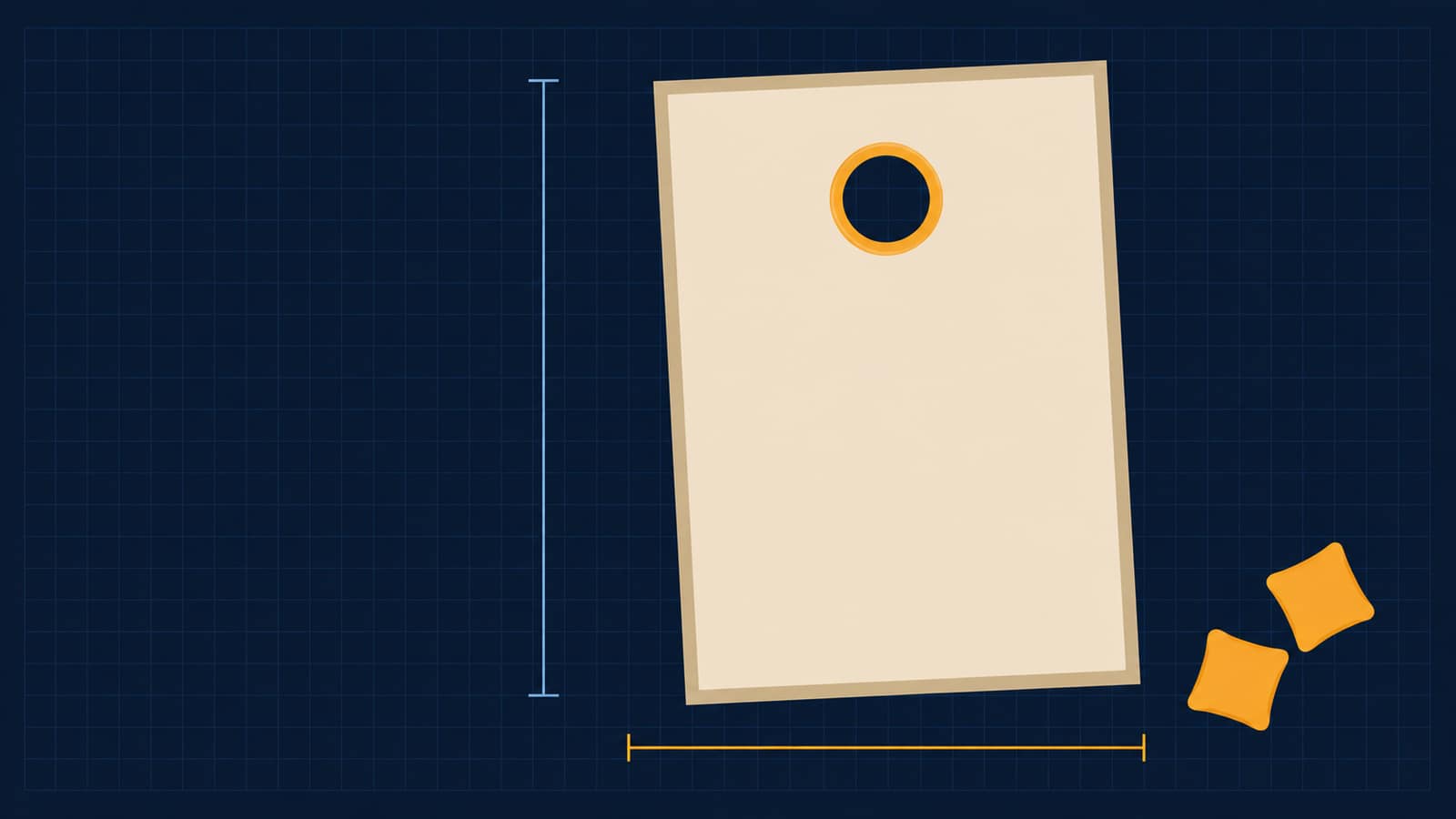
Board specification
These are the figures both governing bodies publish. Where they differ, both are given, and a board built to the overlap is legal under either.
| Dimension | ACL | ACO |
|---|---|---|
| Length | 48 in ±1/4 in | 47.5 – 48 in |
| Width | 24 in ±1/4 in | 23.5 – 24 in |
| Hole diameter | 6 in ±1/8 in | 6 in |
| Hole centre from back edge | 9 in ±1/8 in | 9 in from the top |
| Hole centre from each side | Centred (12 in) | Centred (12 in) |
| Back edge height | 12 in ±1/2 in | 12 in |
| Front edge height | 2.5 – 3.5 in | 3 – 4 in |
| Surface thickness | Not specified | Min 1/2 in with backing, or 3/4 in |
The only specification the two bodies genuinely disagree on is the front-edge height. The ACL wants the front edge between 2.5 and 3.5 inches off the ground; the ACO wants it between 3 and 4 inches. The overlap is 3 to 3.5 inches, so a board built to that range satisfies both rule books at once. If you are building a board and have no idea which circuit you might one day play on, build to the overlap.
Everything else is either identical or a difference of tolerance rather than intent. The ACO allows a slightly smaller playing surface, down to 47.5 by 23.5 inches, where the ACL specifies 48 by 24 with a quarter-inch tolerance either way. In practice a board cut from a standard sheet at exactly 48 by 24 inches is comfortably legal under both.
Note that both bodies measure the hole from the same edge despite describing it differently: the ACL says 9 inches from the back edge, the ACO says 9 inches from the top. That is the same edge, the raised one, so there is no disagreement to resolve.
Common questions about cornhole dimensions
What size is a regulation cornhole board?
- Forty-eight inches long by 24 inches wide, or 4 feet by 2 feet. The ACL specifies exactly that with a quarter-inch tolerance; the ACO permits a playing surface between 47.5 and 48 inches long and 23.5 and 24 inches wide.
How big is the hole in a cornhole board?
- Six inches in diameter, which is exactly enough for a 6-inch bag to fall through when it folds. It is centred across the width of the board and its centre sits 9 inches from the back edge, leaving 6 inches of board between the top of the hole and the back edge.
How high should a cornhole board be?
- Twelve inches at the back edge, measured from the ground to the top of the playing surface. The front edge is lower: the ACL specifies 2.5 to 3.5 inches and the ACO 3 to 4 inches, so building to 3 to 3.5 inches satisfies both.
How much does a cornhole bag weigh?
- About one pound. The ACL permits 15.5 to 16.5 ounces and the ACO 15.75 to 16.25 ounces. Because the ACO window sits inside the ACL window, a bag that meets the ACO specification is legal under both.
Are cornhole bags filled with corn?
- Not any more. The game is named after its original whole-corn fill, but the ACO now specifies plastic resin beads that will not break down. Corn rots, absorbs water and changes the weight of the bag, so it is no longer tournament legal.
What size is a cornhole court?
- The ACO publishes a court 8 feet wide by 40 feet long with at least 12 feet of overhead clearance, and a pitcher’s box 4 feet by 3 feet at each end on both sides.
Sources
All figures on this page were read directly from the American Cornhole League’s published Rules and Regulations and the American Cornhole Organization’s official rules on 4 August 2026. Where the two documents differ, both figures appear above rather than being averaged or silently reconciled.